
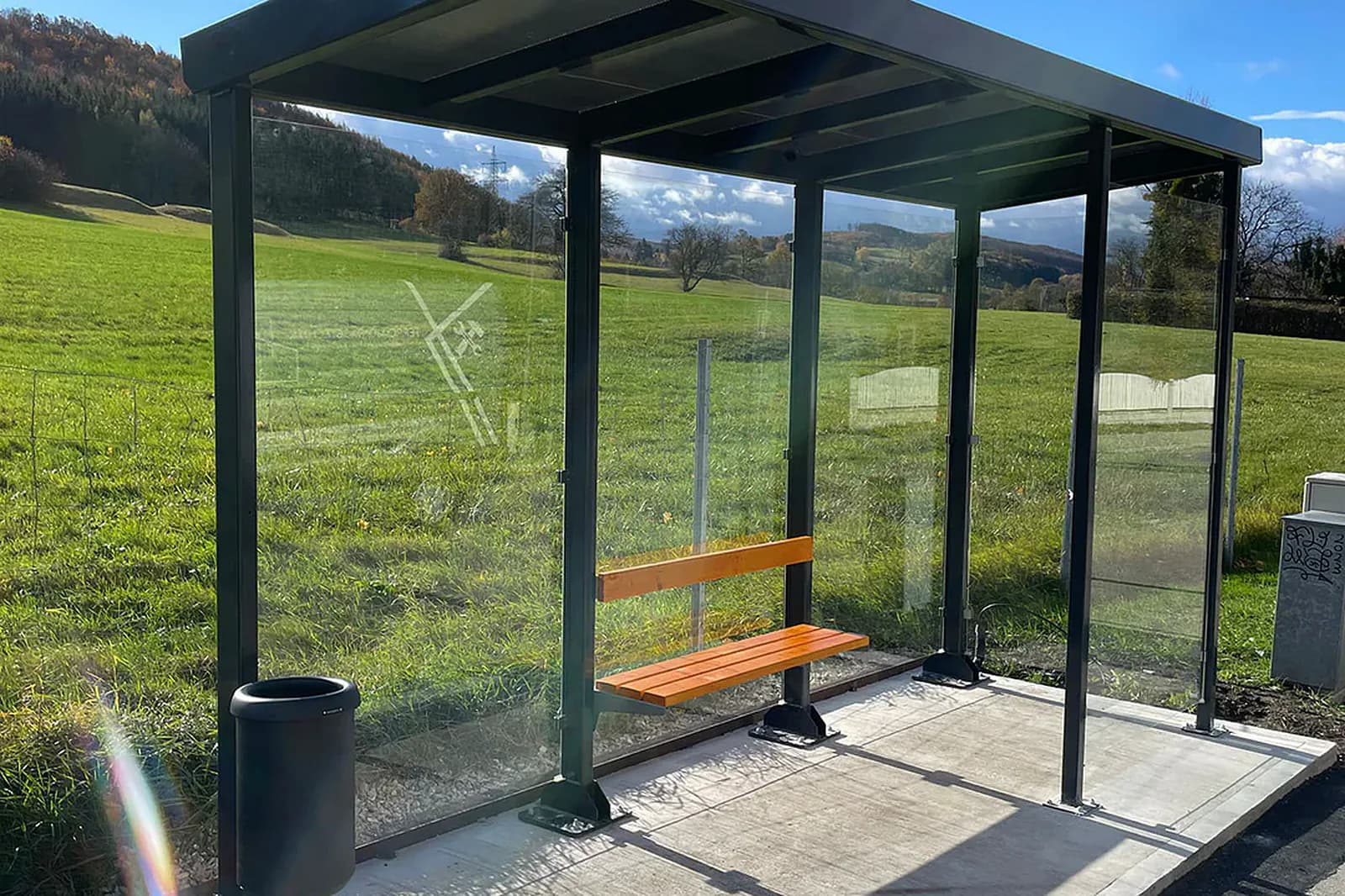
Standard Bus Shelters
Cantilever and freestanding bus shelters built for Canadian winters — tempered glass walls, anti-graffiti panels, integrated bench.
Standard Bus Shelters
Standard bus shelters are the workhorse of every Canadian transit system — a freestanding or cantilever-mounted enclosure with three glazed walls, an integrated bench, and a roof sized for local snow load. BusShelters. ca builds standard shelters in 4-foot, 6-foot, 8-foot, 10-foot, and 12-foot lengths, all on a 6063-T6 aluminum frame with 6 mm tempered safety glass to CSA Z97.
Features & Specifications
About Standard Bus Shelters
Key Takeaways
- ✓Key features: 6063-T6 aluminum frame with structural posts engineered to NBCC 2020 snow and wind loads, 6 mm tempered safety glass walls to CSA Z97.1 (8–10 mm polycarbonate option for vandal-prone sites), ACM or polycarbonate twin-wall roof, sloped 3° away from boarding edge
- ✓Backed by a 10-year warranty
Every standard shelter ships with stamped engineering for the destination province's snow load (Ss 1. 0–4. 0 kPa) and wind load (q1/50 0. 40–0.
Standard Bus Shelters — Engineering & Construction
95 kPa) per the National Building Code of Canada 2020. Footings are sized to the municipal frost depth — 0. 6 m in Vancouver, 1. 2 m in Toronto, 1.
Installation & Compliance
5 m in Calgary, 2. 0 m in Winnipeg, 2. 4 m in Edmonton, 3. 0 m in Yellowknife — and shipped with anchor templates for cast-in-place or pre-cast pier installation.
Warranty & Support
The bench is a powder-coated aluminum slat assembly, 1. 8–3. 0 m long, with anti-skateboard caps and an optional armrest for AODA / CSA B651-18 accessibility compliance. Side walls accept clip-in advertising panels, route-map holders, or LED-lit info backers.
Procurement & Lead Time
Anti-graffiti treatment is a sacrificial film standard, with permanent fluoropolymer coating available for high-vandalism corridors. Lead time is 6–10 weeks for standard configurations and 8–14 weeks for non-standard sizes; replacement parts ship in 48 hours from our Brantford, Ontario warehouse. Standard shelters are specified by Toronto Transit Commission (TTC), OC Transpo (Ottawa), TransLink (Vancouver), Calgary Transit, Edmonton Transit Service, and 80+ smaller Canadian agencies. Pricing starts at $6,500 for the structure and $2,500 for installation including footings; volume orders of 20+ units reduce per-unit pricing 15–25%.
Installation is performed by bonded and insured BusShelters. ca crews working under provincial trade-permit with all required worksite signage, traffic-management plans, and locate-clearance documentation. A typical standard shelter is footing-poured day 1, structure-erected day 3, glazed and benched day 4 — total 3–4 working days per site once permits are clear. We provide a 10-year structural warranty on the aluminum frame, 5-year warranty on glazing and bench, 2-year warranty on lighting, and a 48-hour replacement-parts SLA from our Brantford warehouse.
Every project includes a digital as-built package (drawings, photos, GPS coordinates, manufacturer's serials) so your maintenance and asset-management systems have a clean record on day one. Annual maintenance contracts cover panel replacement, anti-graffiti refresh, bench powder-coat touch-up, and structural inspection — typically $300–$600 per shelter per year depending on cleaning frequency. Key Takeaway: Climate-rated, AODA-compliant, and stamped-engineered for Canadian transit deployment — full procurement documentation included.
Product Specifications
| Specification | Details |
|---|---|
| Product | Standard Bus Shelters |
| Frame & Glazing | 6063-T6 aluminum frame; 6 mm tempered safety glass to CSA Z97.1 (polycarbonate option) |
| Installation | Bonded crews, full traffic-management, 3–4 working days per site |
| Warranty | 10-year structural; 5-year glazing & bench; 48-hour replacement-parts SLA |
| Compliance | NBCC 2020 stamped engineering; AODA / CSA B651-18 accessibility |
| Lead Time | 6–10 weeks standard configurations; 8–14 weeks custom |
Why Choose Standard Bus Shelters?
Standard Bus Shelters from BusShelters.ca are engineered for Canadian transit conditions — climate-rated, accessibility-compliant, and shipped with full procurement documentation so AHJ review is single-pass.
Standard Bus Shelters Available Across Canada
We design, supply, and install standard bus shelters in major cities across all 10 provinces and 3 territories.
Frequently Asked Questions About Standard Bus Shelters
How much does a bus shelter cost in Canada?
In Canada, standard freestanding bus shelters typically run $6,500–$14,000 for the structure plus $2,500–$6,000 for installation, including footings and electrical. Solar-powered units add $1,500–$3,500, and heated shelters add $3,000–$7,000 depending on heater wattage and bench heat. Custom architectural shelters for heritage districts or campuses can reach $25,000–$60,000+. Volume orders of 20+ units typically reduce per-unit pricing by 15–25%. Lifecycle cost is the better lens than first-cost: a stamped-engineered shelter with a 10-year structural warranty and a 48-hour parts SLA typically delivers a 15–18 year service life on the structure and 5–8 years on glazing and benches before refresh, which works out to roughly $1,000–$1,800 per shelter per year total cost of ownership including maintenance. Off-grid solar and heated configurations carry a higher first-cost but eliminate trenched-electrical and ongoing utility charges, which on rural sites pays back inside 6 years.
Are your bus shelters AODA / accessibility-code compliant?
Yes. Every shelter we ship to Ontario meets AODA (Accessibility for Ontarians with Disabilities Act) integrated standards, including ≥1500 mm clear floor space for wheelchairs, transfer benches, tactile wayfinding strips, and high-contrast colour bands. We also conform to CSA B651, the BC Building Code Section 3.8, and the Quebec RBQ accessibility provisions across all provinces. Compliance is documented per province: AODA Design of Public Spaces in Ontario, RBQ Chapter VIII in Quebec, BC Accessibility Act in British Columbia, and the federal Accessible Canada Act for federally-regulated sites (airports, federal-government buildings). Every shelter ships with the CSA B651-18 design checklist cross-referenced to the as-built drawings, which most procurement teams drop directly into their accessibility-board review pack. A free accessibility audit of any existing shelter network is available on request — useful when planning capital-renewal upgrades.
How long does a bus shelter installation take?
A standard 4-foot or 6-foot freestanding shelter installs in 4–8 hours on a prepared concrete pad. If we pour footings, total project time is 3–5 days including 48-hour concrete cure. Larger custom or modular configurations take 1–2 weeks. Smart-shelter electrical and data hookups add 1 day. We coordinate around transit-service schedules and typically complete municipal installs in single overnight windows. Permitting is the variable: in mature municipalities (Toronto, Montréal, Vancouver, Ottawa, Calgary) building and right-of-way permits issue in 2–4 weeks; smaller municipalities can stretch to 6–8 weeks when the public-works engineer is the only reviewer. We handle the permit submission ourselves and provide weekly status updates. For projects with tight occupancy-permit deadlines, a temporary-shelter rental (8-week minimum) covers the gap until the permanent install completes — used most often on private-developer site-plan-approval timelines.
Do you supply French-language labelling and signage for Quebec deployments?
Yes. All shelters destined for Quebec ship with French-only or French-dominant signage in compliance with the Charte de la langue française (Loi 96). Manuals, decals, and digital displays default to French with English available where federally regulated. Our Montreal and Quebec City installation crews are bilingual. Bill 96 (Loi 96) tightened French-signage requirements effective June 2025 — functional copy on transit signage must be in French, and where bilingual signage is permitted the French version must be at least equally prominent. We work with the Office québécois de la langue française (OQLF) signage standard for every Quebec deployment and supply the francophone-review certificate with project closeout. Our QC project manager is bilingual and routes francophone content through native review before fabrication. Same approach for New Brunswick official-bilingualism sites — both languages, equal prominence, OQLF-equivalent review.
Related shelters
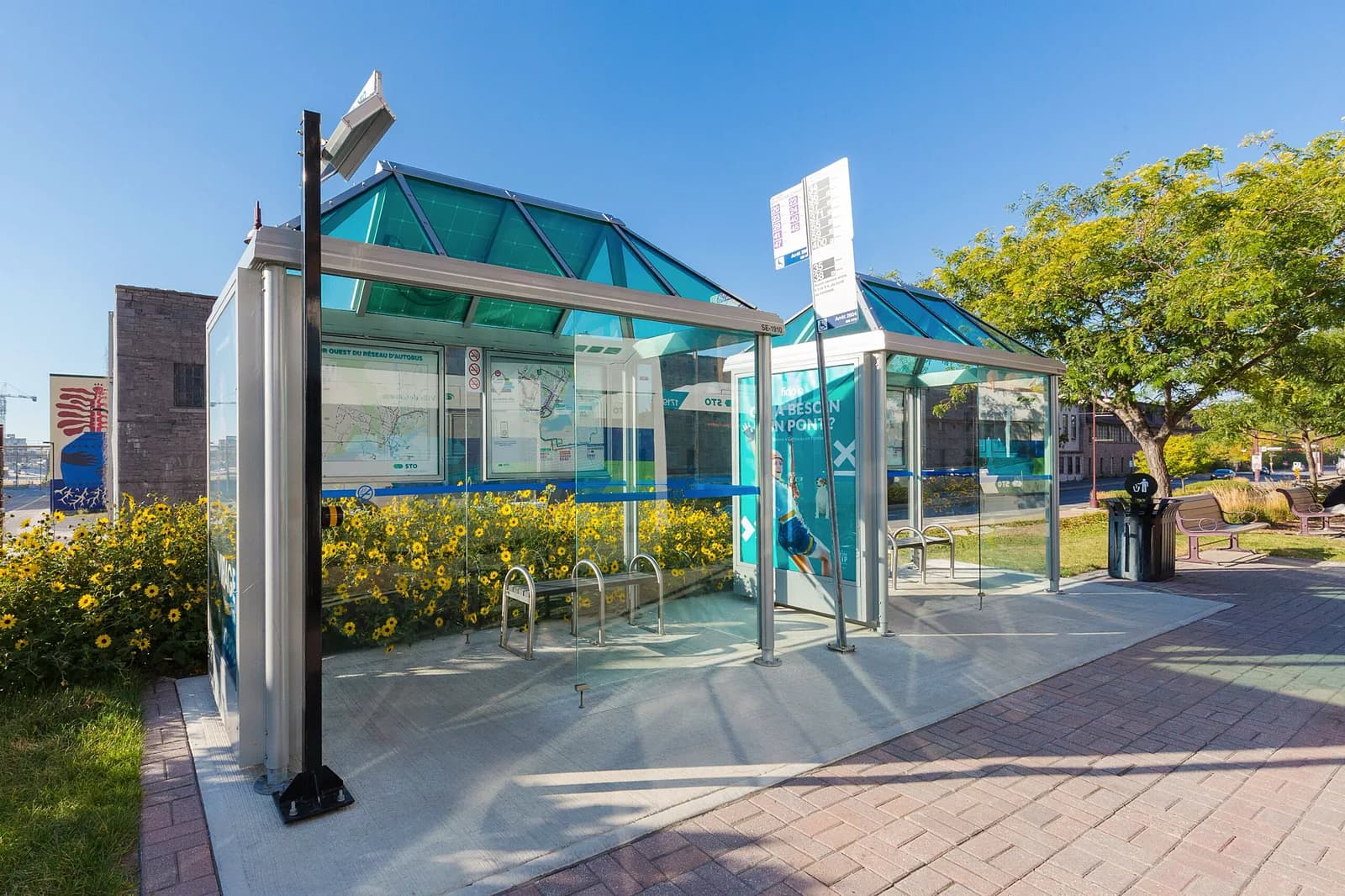
Solar-Powered Bus Shelters
Off-grid LED-lit shelters with rooftop PV array — no trenching, no electrical connection, full winter operation.
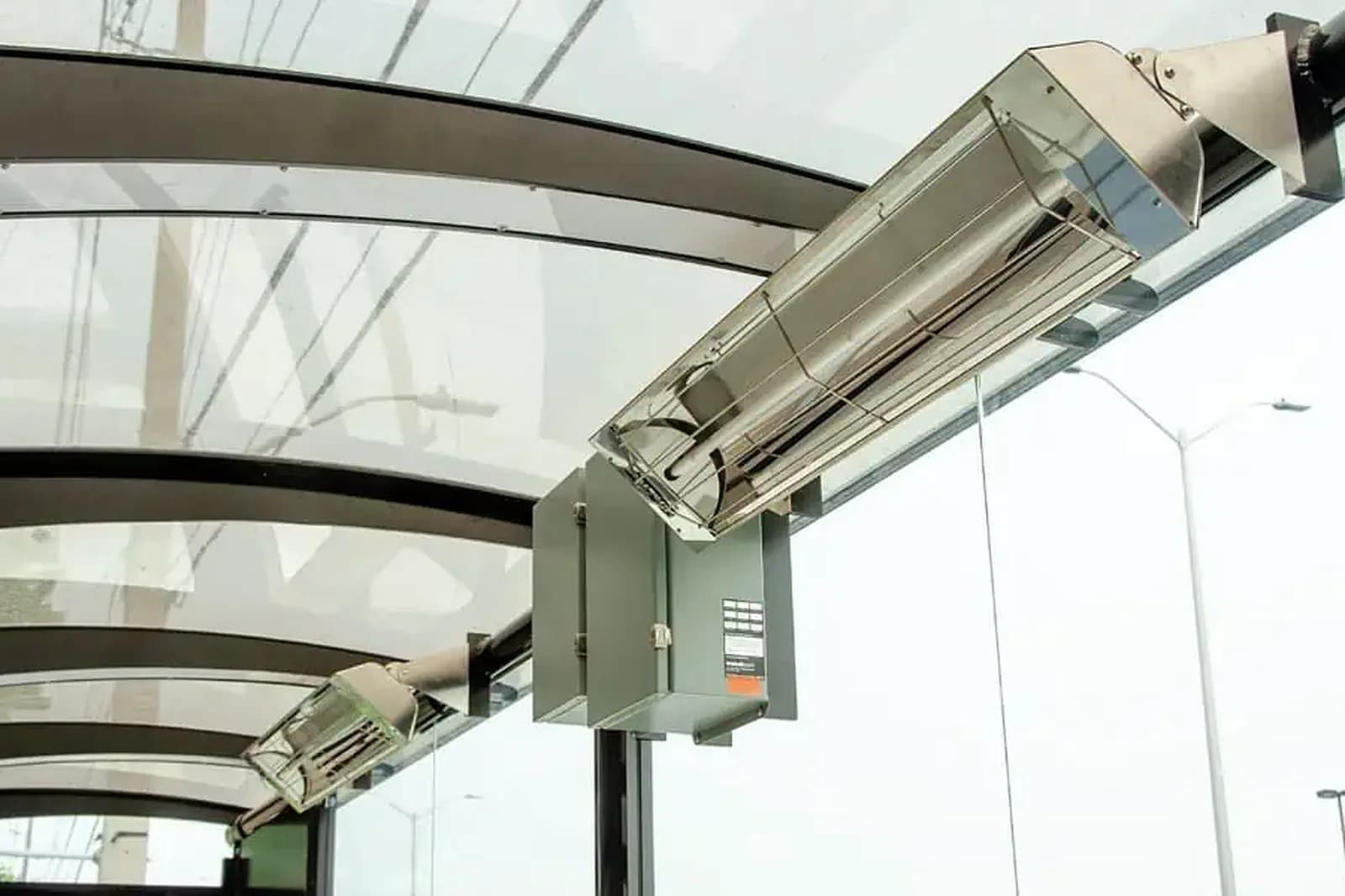
Heated Bus Shelters
Radiant overhead heating panels triggered by motion sensor — thermal comfort below -30°C, heated bench seat option.
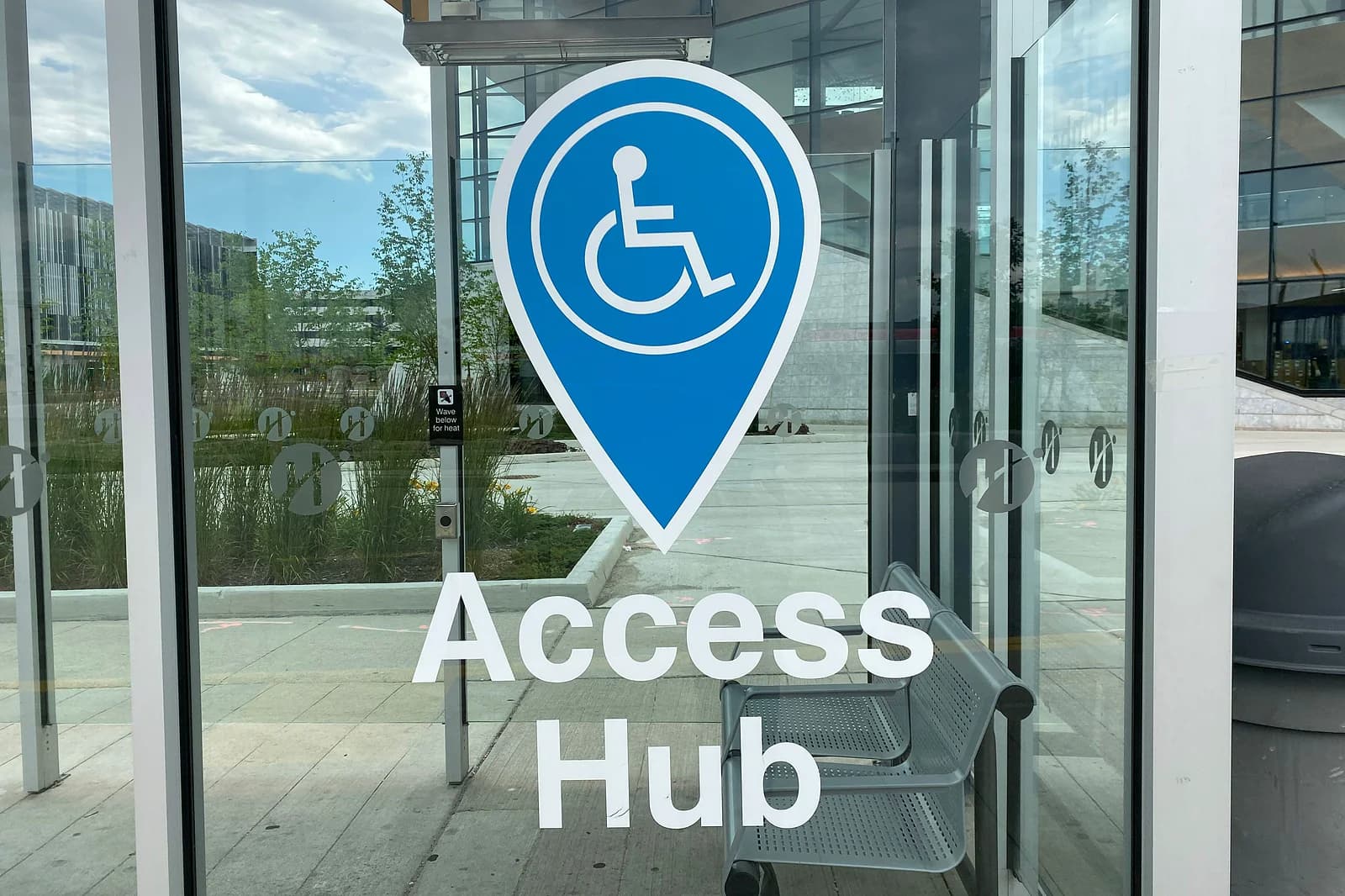
ADA & AODA Accessible Shelters
Wheelchair-clear floor space, transfer bench, tactile wayfinding, contrasting colour bands — meets AODA, BC Building Code Section 3.8, and CSA B651.
Need Standard Bus Shelters?
Our bid desk responds to every quote and RFP within one business day. Volume discounts available on 20+ unit orders.