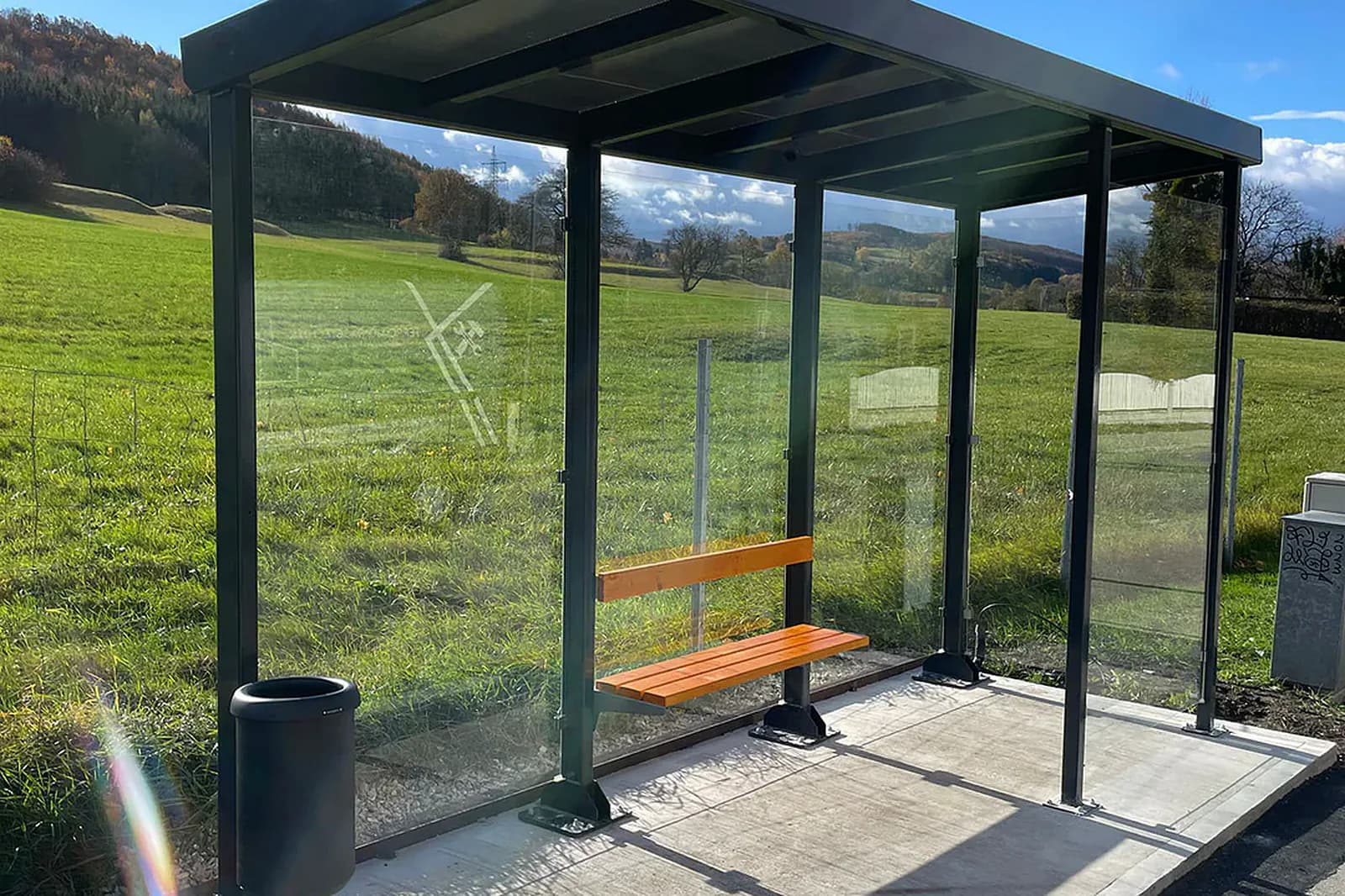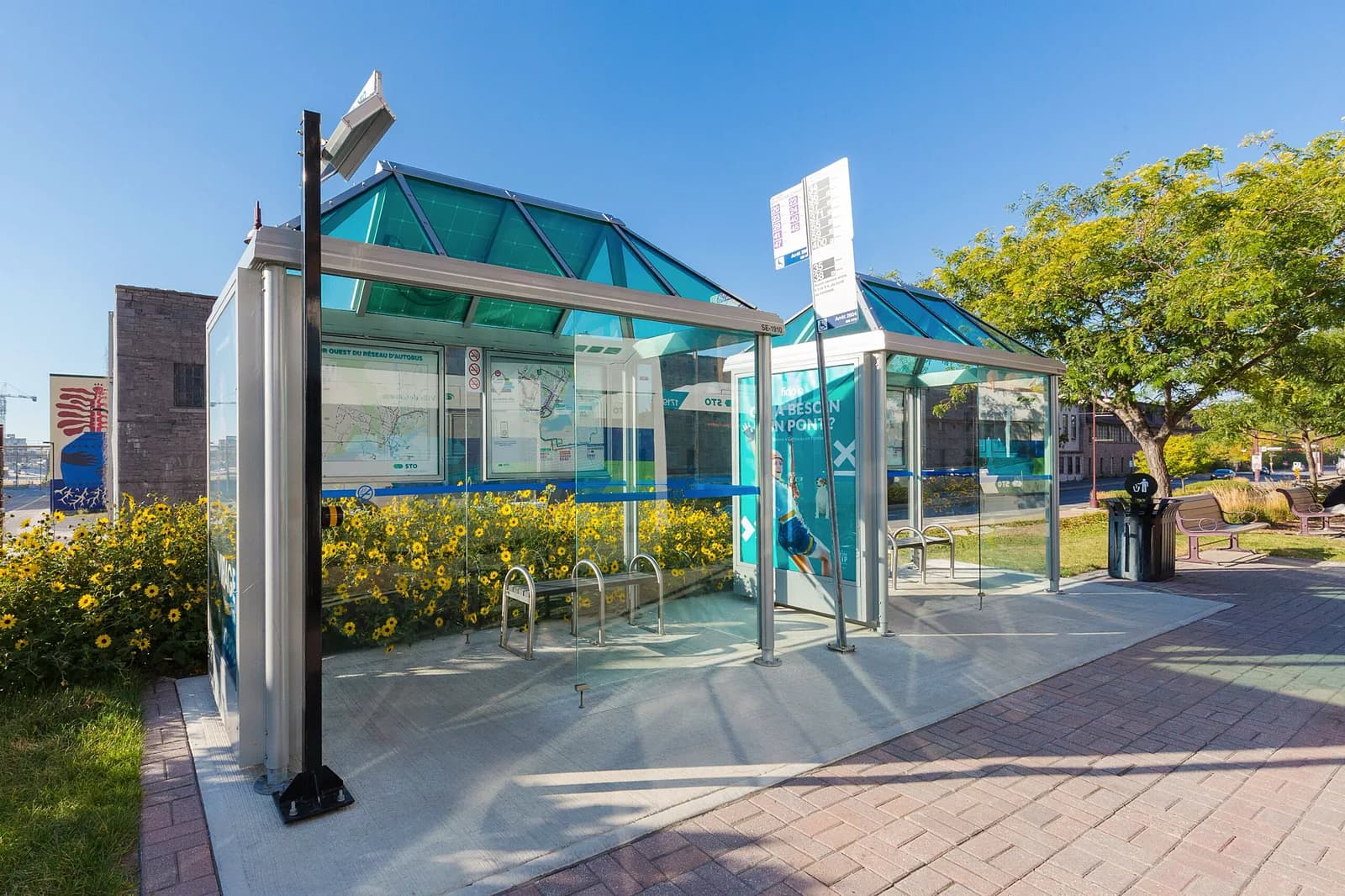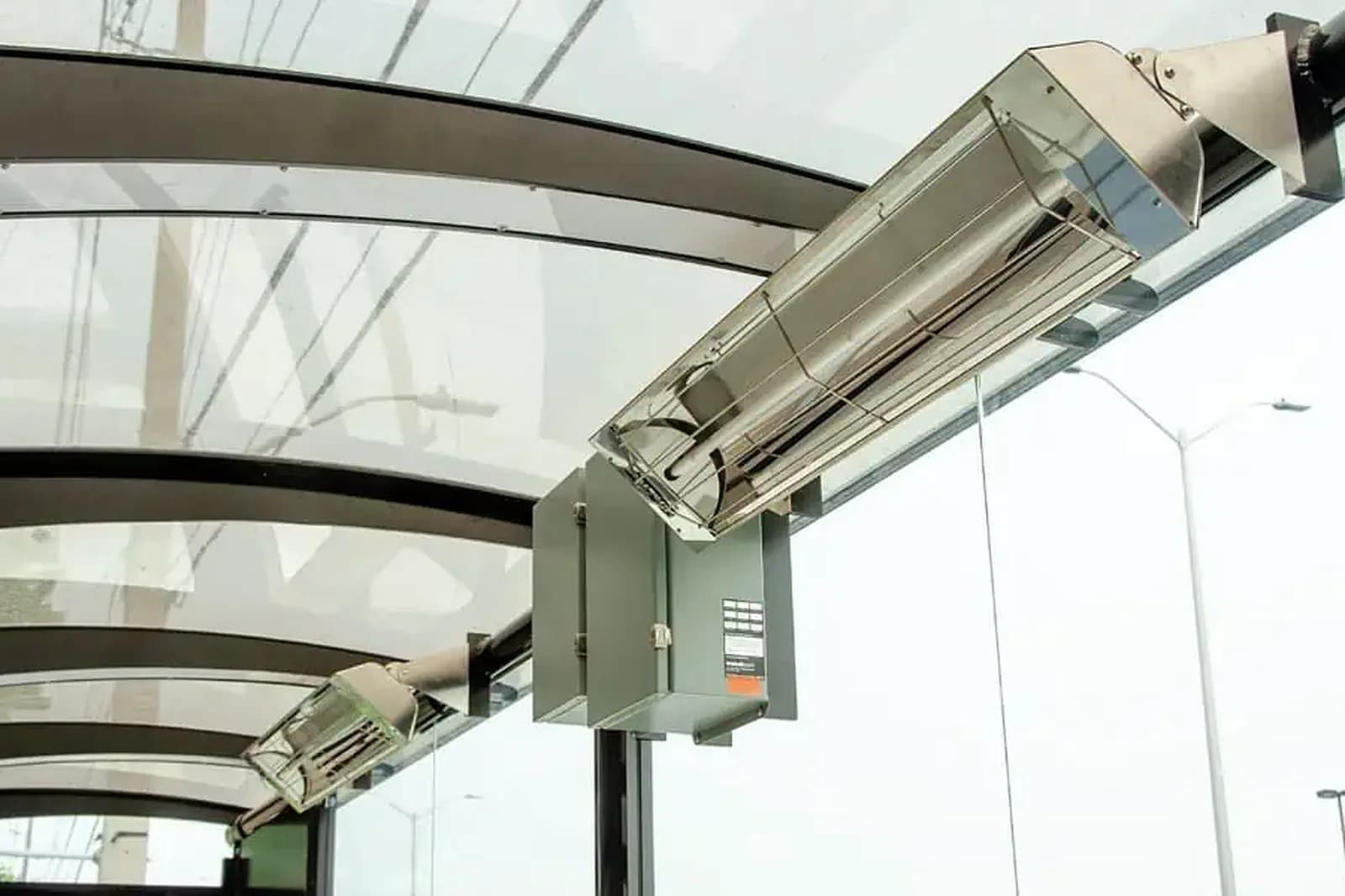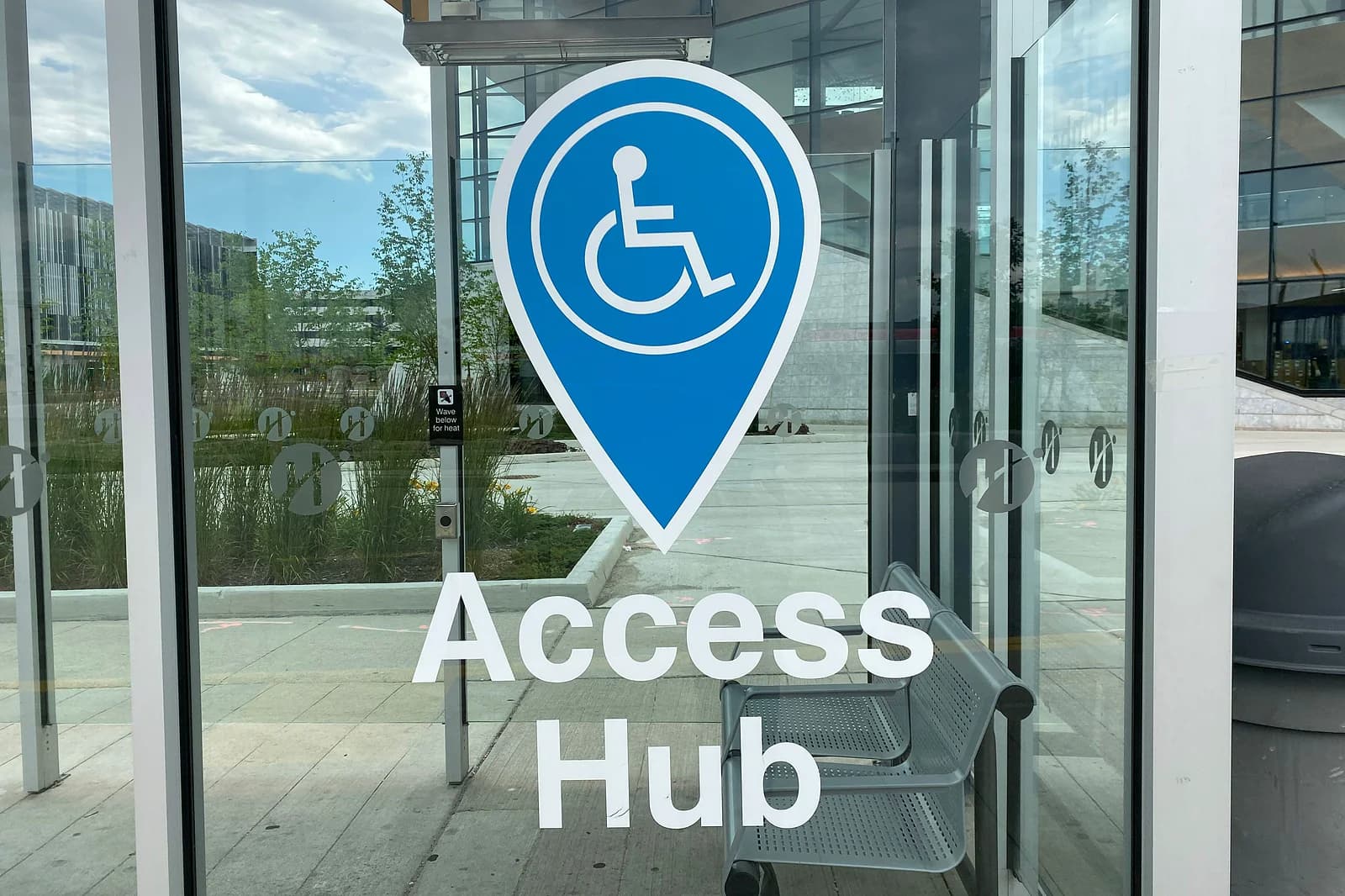
bus shelters in Quebec City.

bus shelters in Quebec City.

Engineered, supplied, and installed in Quebec City, Quebec — climate-rated, AODA-compliant, with stamped drawings.

bus shelters in Quebec City, Quebec
At a glance

Quebec City, QC

Quebec City, Quebec, is served by Réseau de transport de la Capitale (RTC) (131 routes) and is home to roughly 1,700 transit shelters across the city. The local design code requires every shelter to handle a 3. 4 kPa snow load and a 0.

Transit authority
Réseau de transport de la Capitale (RTC) · 131 routes
Shelter network
~1,700 shelters
Snow load (Ss)
3.4 kPa
Wind load (q1/50)
0.42 kPa
Get a Quote
Specifications

Engineering Specs for Quebec City

Transit authorityRéseau de transport de la Capitale (RTC) · 131 routes
Shelter network~1,700 shelters
Snow load (Ss)3.4 kPa
Wind load (q1/50)0.42 kPa
Frost depth1.6 m
Climate zoneZone 7A
Avg snowfall303 cm
Avg winter temp-12.4°C
Accessibility codeCNB / RBQ
Population549K
On the ground in

bus shelters in Quebec City

The Quebec City fleet operates roughly 1700 shelters across 131 Réseau de transport de la Capitale (RTC) routes, with stamped engineering at Ss 3. 4 kPa snow load and q1/50 0. 42 kPa wind load. Local installs use municipal-permit submission, locate-clearance documentation, and traffic-management plans co-ordinated with Quebec highway and right-of-way standards.

Quebec City — Engineering & Permits

Replacement parts ship from Brantford with a 48-hour SLA to Quebec City maintenance teams, and our regional install crews are bonded and insured for Quebec prevailing-wage public-sector work.

In Quebec City, Quebec, every shelter is engineered to 303 cm annual snowfall, -12.4 °C average winter temperature, and 1.6 m frost-depth footings — with CNB / RBQ accessibility compliance and stamped engineering for Zone 7A. BusShelters.ca delivers, installs, and maintains for Réseau de transport de la Capitale (RTC) and private clients.

Benefits

Why Quebec City clients choose BusShelters.ca

Built for Canadian WintersStamped to NBCC 2020 snow and wind loads for every Canadian municipality — frost-depth footings from 0.6 m to 3.0 m.
Procurement-ReadyStamped drawings, BOM, COC, and as-built package delivered with every shipment so AHJ review is single-pass.
AODA & CSA CompliantMeets AODA, CSA B651-18 accessibility, and CSA Z97.1 safety-glass requirements without optional add-ons.
48-Hour Parts SLAReplacement glazing, panels, and benches ship within 48 hours from our Brantford, Ontario warehouse.
FAQ

Frequently Asked Questions — Quebec City

Do you supply French-language labelling and signage for Quebec deployments?

Yes. All shelters destined for Quebec ship with **French-only or French-dominant signage** in compliance with the **Charte de la langue française (Loi 96)**. Manuals, decals, and digital displays default to French with English available where federally regulated. Our Montreal and Quebec City installation crews are bilingual. Bill 96 (Loi 96) tightened French-signage requirements effective **June 2025** — functional copy on transit signage must be in French, and where bilingual signage is permitted the French version must be at least equally prominent. We work with the **Office québécois de la langue française (OQLF)** signage standard for every Quebec deployment and supply the **francophone-review certificate** with project closeout. Our QC project manager is bilingual and routes francophone content through native review before fabrication. Same approach for **New Brunswick official-bilingualism** sites — both languages, equal prominence, OQLF-equivalent review.

What snow load and wind load should a Canadian bus shelter meet?

Canadian bus shelters must be engineered to the **National Building Code of Canada** snow and wind loads for the installation city — these vary widely (e.g., **2.2 kPa snow** in Toronto vs. **3.9 kPa** in Saguenay; **0.44 kPa wind** in Toronto vs. **0.84 kPa** in St. John's). All BusShelters.ca structures ship with stamped engineering drawings specific to your city and frost depth. Both values come from **NRCan Climatic Data tables** referenced in NBCC 2020 — there's a published 1/50-year value for every Canadian municipality, which is what the P.Eng. stamp is calculated against. For coastal sites add a **terrain-exposure factor** (Vancouver Island, Atlantic Canada) and for high-elevation sites a **topographic factor** (Whistler, Banff). Roof slope, snow-shed direction, and footing depth-to-frost are derived from these inputs. We supply the calculation package alongside the stamped drawings so the AHJ review is single-pass.

Are your bus shelters AODA / accessibility-code compliant?

Yes. Every shelter we ship to Ontario meets **AODA** (Accessibility for Ontarians with Disabilities Act) integrated standards, including ≥1500 mm clear floor space for wheelchairs, transfer benches, tactile wayfinding strips, and high-contrast colour bands. We also conform to **CSA B651**, the **BC Building Code Section 3.8**, and the **Quebec RBQ** accessibility provisions across all provinces. Compliance is documented per province: **AODA Design of Public Spaces** in Ontario, **RBQ Chapter VIII** in Quebec, **BC Accessibility Act** in British Columbia, and the federal **Accessible Canada Act** for federally-regulated sites (airports, federal-government buildings). Every shelter ships with the **CSA B651-18 design checklist** cross-referenced to the as-built drawings, which most procurement teams drop directly into their accessibility-board review pack. A free **accessibility audit** of any existing shelter network is available on request — useful when planning capital-renewal upgrades.

Can bus shelters be installed without a power connection?

Yes — our **solar-powered models** include a roof-mounted PV array, sealed gel battery, and LED lighting that runs autonomously through Canadian winter daylight. No trenching, no electrical permit, no service connection. Heated and smart-display models still require grid power or a higher-capacity solar+battery system; we'll size that to your site during quoting. The hidden cost saving on off-grid installs is the **electrical-trenching avoidance**: a typical grid-connected shelter requires **$4,000–$12,000** of trenching, conduit, and service-drop work depending on the distance to the nearest utility pole or transformer, plus utility connection fees and ongoing electrical billing. A solar-PV configuration eliminates that cost entirely. For sites that need heat as well, our **solar-heated combo** carries a 1500 W heater on a 600 Ah / 48 V battery, suitable for 4-hour peak-commute heating windows at -20 °C without a grid feed.

Ready to spec a shelter for Quebec City?

Send us your scope, route, or RFP — our bid desk responds within one business day with stamped engineering and a fixed quote.

Across Canada

Other Canadian cities we serve